- Publication date
Talayotic Menorca in 2 Days: Essential UNESCO Route
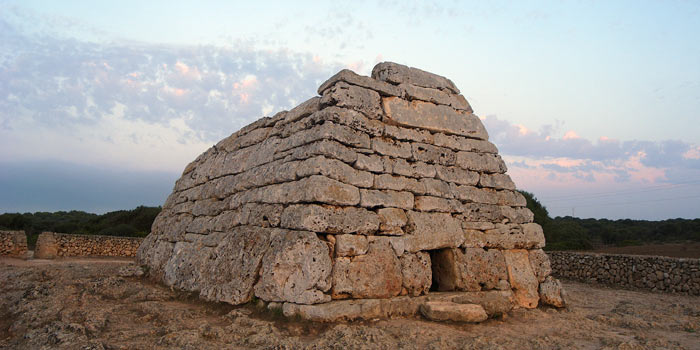
The Talayotic island is not “seen”; it is read on the ground. In two days it is possible to draw a clear route –without rushing– that connects navetas, taulas and talayots to understand what Talayotic Menorca is and why its archaeological landscape has been recognized by UNESCO.
More than a visit, it is an experience: walking among these stones is entering into dialogue with those who raised them more than three thousand years ago. Menorca is not only traveled; it is interpreted, and each traveler adds their own gaze to this millenary story.
This guide is designed for travelers with a car and proposes an enjoyable pace with breathing room, with sunrise/sunset suggestions where light works its magic.
Day 1 · West and Pla des Migjorn: naveta, settlements and monumental taula
1. Sunrise at Naveta des Tudons (Ciutadella)
Why: It is the most famous monument of Talayotic Menorca and a symbol of the island. This funerary construction, built more than 3,000 years ago, is unique in the entire western Mediterranean. It was used as a collective tomb, and excavations revealed human remains accompanied by ceramics, bronze bracelets and necklace beads, witnesses of a complex funerary ritual.
Visit: 30–40 min, enough to walk around and observe how its silhouette stands out against the horizon.
Tip: Waking up early is worth it: at first light, the naveta is usually silent, and the rising sun lengthens the shadows on its façade, emphasizing its “upturned ship” shape.
2. Torre d’en Galmés
Why: It is the largest Talayotic settlement in Menorca, an authentic “urban settlement” of the Iron Age. From its elevated position, much of the south of the island can be seen, allowing control of the territory and surveillance of maritime routes.
Visit: 75–90 min, with time to explore the three talayots, circular houses and the taula sanctuary.
Detail: Notice the sophisticated water collection system: channels carved into the rock carried rainwater into underground cisterns. The domestic column bases also stand out, showing the transition from circular architecture to more compartmentalized spaces.
Extra: From the viewpoint you can clearly see why this settlement was strategic for centuries.
3. Midday in Alaior / Es Migjorn (slow pause)
Pace: Dedicate 60–90 min to recharge. Alaior offers medieval charm, artisan ice creams and lively squares. In Es Migjorn, smaller and quieter, the atmosphere is rural and serene.
Climate: In summer, look for shade and fresh water; in winter, dry-stone walls protect from the north wind.
Cultural note: These towns show how historic Menorca adapted to the relief of the Pla des Migjorn, with whitewashed houses, arched doorways and urban layouts designed to withstand seasonal changes.
4. Afternoon at Torralba d’en Salort
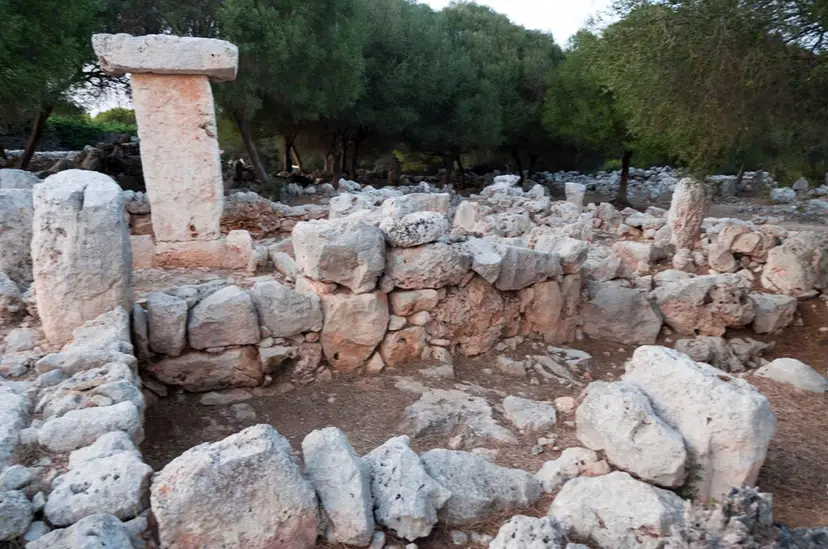
Why: Its taula, over 4 meters high, is one of the most monumental in Menorca. The sanctuary where it stands still conserves the atmosphere of a ritual space where offerings were probably made to a protective deity of the community.
Visit: 60–75 min, enough to walk around the taula, observe the fitting of the cyclopean blocks and visit other structures of the settlement.
Sunset: The slanting light illuminates the surface of the great monolith, highlighting tool marks and the almost impossible proportions of the vertical stone.
Curiosity: Punic and Roman objects were found here, proof that Talayotic sanctuaries continued to be used and reinterpreted by later cultures.
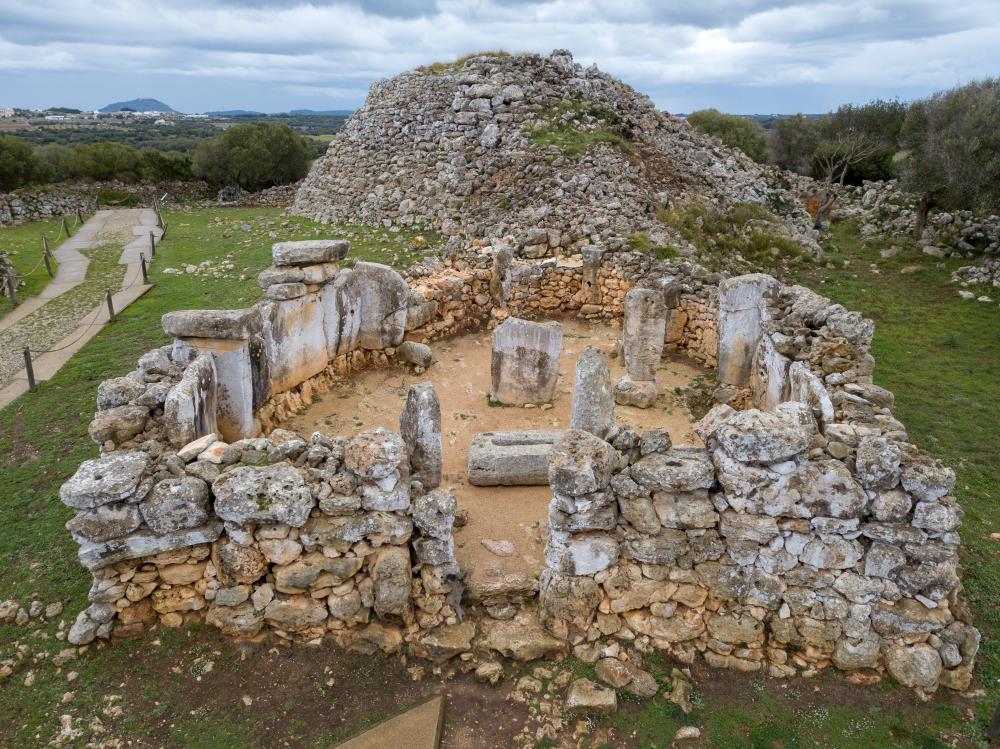
Day 2 · Around Maó: talayots, taulas and cyclopean walls
5. Sunrise at Talatí de Dalt
Why: Its inclined taula is one of the most unique in Menorca and conveys an almost sculptural visual force. This effect is probably due to later structural movements, but today it creates a special atmosphere. The site also includes remains of circular houses, caves carved into the rock and wall fragments.
Visit: 60–75 min, with time to explore the different areas.
Tip: At dawn, the silence of the Menorcan countryside and soft light reinforce the sense of mystery. Perfect for photos without other visitors around.
Curiosity: Excavations revealed Roman-era objects, indicating the area remained occupied centuries after the original construction.
6. Trepucó
Why: It is one of the largest settlements on the island and preserves a walled enclosure of monumental dimensions. Its large taula dominates the central sanctuary and shows the precision of cyclopean block fitting.
Visit: 60–75 min, enough to explore both the sanctuary and defensive perimeter.
Detail: Walk the full circuit of the walls; from the outside you can appreciate the magnitude of the oppidum and how it was designed to resist attacks.
Extra: The site was also used in Roman and medieval times, which explains the mixture of findings in different archaeological layers.
7. Closing at Binissafullet (Sant Lluís)
Why: This small taula sanctuary offers an intimate, tranquil atmosphere, different from the monumental scale of Torralba or Trepucó. The enclosure preserves its central taula and part of the perimeter wall, surrounded by fields and dry-stone walls that reinforce the sense of authenticity.
Visit: 30–45 min, enough to stroll among the structures and pause before the taula.
Sunset: The soft light of the end of the day bathes the place in golden tones, creating a serene and photogenic closure to the route.
Note: Its small size makes it a perfect stop after Trepucó, before returning to Maó or heading to Sant Lluís for dinner.
Checklist of segments, timings and notes
| Segment / Stop | Driving | Visit | Parking | Notes |
|---|---|---|---|---|
| Ciutadella → Naveta | 10–15 min | 30–40 min | Entrance | Best at sunrise |
| Naveta → Torre d’en Galmés | 25–35 min | 75–90 min | Signposted | Water, uneven terrain |
| Galmés → Pause | 10–20 min | 60–90 min | Urban | Avoid heat |
| Pause → Torralba | 10–15 min | 60–75 min | Signposted | Photogenic sunset |
| Maó → Talatí | 10–15 min | 60–75 min | Entrance | Best early |
| Talatí → Trepucó | 10–15 min | 60–75 min | Nearby | Walk full wall |
| Trepucó → Binissafullet | 10–15 min | 30–45 min | Signposted | Depending on energy |
Approximate timings for relaxed pace. Adjust depending on weather and interests.
Practical tips
- Closed shoes, uneven terrain.
- Summer → early/late hours, water.
- Winter → windbreaker.
- Don’t climb or move stones.
- With kids: play the “guardians” game.
Conclusion: a journey beyond the stone
Exploring Talayotic Menorca in two days is not just about visiting monuments: it’s about engaging with a way of life that shaped the island for more than a millennium. Each naveta, taula or talayot is part of a cultural fabric explaining how ancient communities understood death, the sacred and living together on an island territory.
The value of this route lies in discovering how these cyclopean stones still converse with Menorca’s landscape: the sunrise light on the Naveta des Tudons, the open horizon from Torre d’en Galmés, or the evening silence at Son Catlar. These are moments that help understand why UNESCO recognized this ensemble as World Heritage.
By the end of the itinerary, one realizes that Talayotic Menorca is not an immobile relic of the past, but a living presence that continues to address the traveler. The journey ends, but the island keeps speaking to you in every stone.
If you want to keep listening to that voice and discover what is invisible to the naked eye, Awaita is here to accompany you.
How can Awaita help you on your visit to Menorca?
When you are discovering an island as culturally rich as Menorca, the difference between an ordinary visit and an unforgettable experience lies in context. That’s where Awaita comes into play.
Awaita is much more than an app: it’s an intelligent virtual assistant that turns every corner of Menorca into a living story. Designed specifically for those who want to explore heritage freely, without depending on guides, schedules or language barriers, Awaita is the best tool to discover the most authentic and cultural side of Menorca.
A personalized, accessible experience for everyone
Thanks to its technology, Awaita offers real-time information in several languages and adapted to different ages, making it perfect for both international tourists and residents. Whether you are standing before a Talayotic taula or walking through Ciutadella, Awaita explains what you see with accuracy and warmth, as if an expert guide were by your side.
Discover the invisible at first sight
With Awaita, you will not only know what you are seeing, but also why it matters. It reveals curiosities, local stories, archaeological data and cultural details not found on signs or in traditional guidebooks.
The freedom to learn at your own pace
There are no schedules or preset routes. You decide when and how much you want to know. Awaita is always available on your phone, ready to answer your questions and enrich your visit according to your level of interest.
A key tool for cultural tourism
Menorca is a World Heritage site thanks to its history, and Awaita connects you directly with that legacy. Whether you visit the Naveta des Tudons, the Trepucó settlement or any Talayotic site, with Awaita you’ll have all the information at your fingertips—clear, reliable and in the moment.
If you want to experience Menorca in a deeper, more respectful and enriching way, Awaita is your best ally.
Frequently Asked Questions
Can you cover the essentials in 2 days?
Yes. With a car and a relaxed pace, the suggested itinerary lets you grasp the main typologies (naveta, taula, talayot) without rushing.
What should I bring when visiting the sites?
Closed shoes with grip, water, sun protection or a windbreaker depending on the season, and respect for the land.
Sunrise or sunset, which is better?
Sunrise at Naveta des Tudons and Talatí de Dalt; sunset at Torralba d’en Salort and Son Catlar.
Are there services near the sites?
Generally not inside; plan breaks in Ciutadella, Alaior or Maó and nearby towns.
Can the route be done without a car?
It’s possible by combining bus + taxi, but you’ll lose flexibility and time. This guide is designed for car travel.