- Publication date
Toponymy of Menorca: the origin of the names that shape the island
Menorca is not only walked with the feet, but also with words. Every village, cove or path holds a story in its name: an echo of past cultures, legends and landscapes that are still alive today.
Knowing the toponymy of the island is another way of traveling: each name is a thread connecting geography with memory.
Villages that speak of history
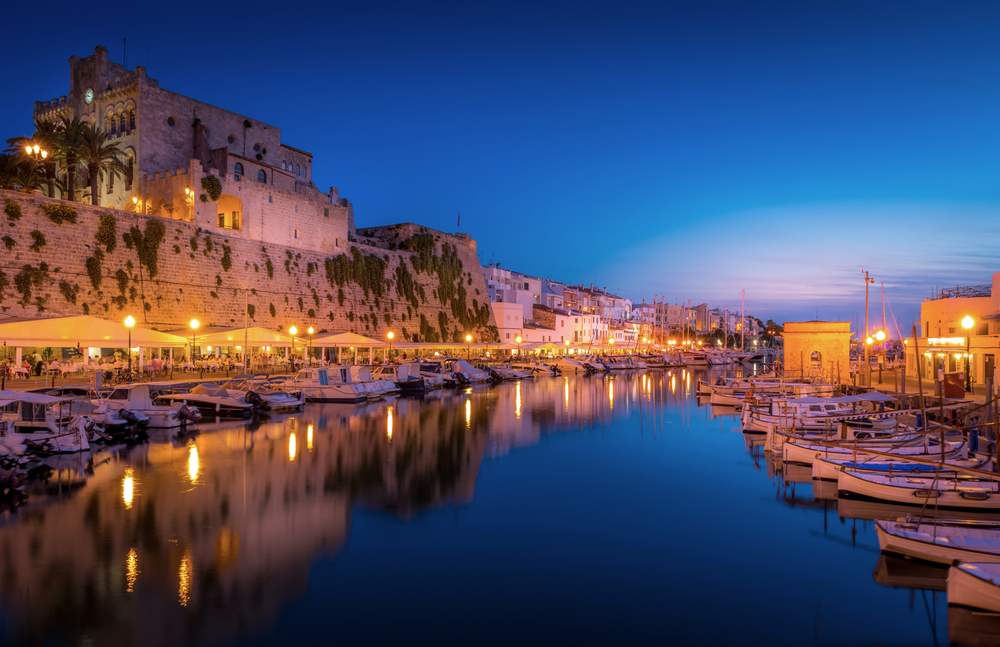
- Ciutadella: “the small city”, inherited from Latin civitatella. The term reflects its role as the main urban center in medieval times.
- Maó: linked to the Carthaginian general Magon, brother of Hannibal, or to the Phoenician term māgen (“shield”), for the protection of its natural harbor, one of the largest in the Mediterranean.
- Es Mercadal: from medieval Latin mercatale, central market place on the island, located at the foot of Monte Toro.
- Es Castell: founded as Georgetown under British rule (18th c.), later renamed Villacarlos under Spanish rule and finally Es Castell, after the fortress of San Felipe.
Each Menorcan municipality is a mosaic of layers: Roman, Islamic, Catalan, French or English. Their names reflect the traces of these periods.
Coves that tell secrets
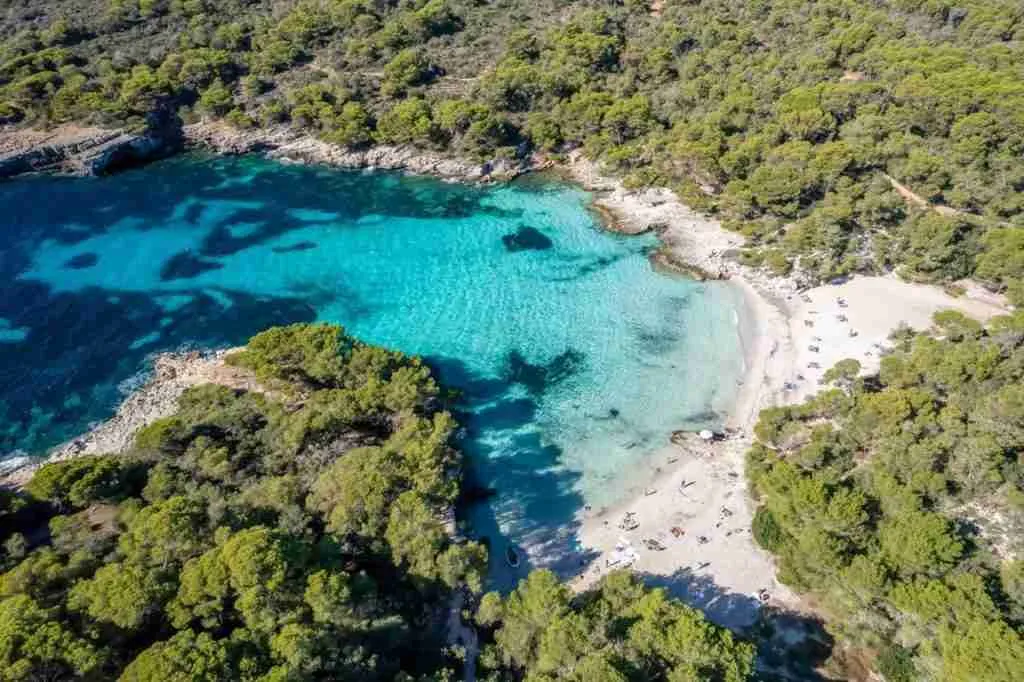
- Cala Turqueta: named after the turquoise blue of its crystal-clear waters, a chromatic evocation that has endured in the tourist imagination.
- Cales Coves: literally “the coves of the caves”, referring to the numerous funerary caves carved into its cliffs.
- Binibèquer: from the Arabic prefix Bini- (“sons of”), memory of ancient Islamic farmsteads. Today it names a picturesque seaside settlement.
- Son Bou: “the ox’s estate”, a rural toponym that became the name of Menorca’s longest beach.
Coastal names evoke colors, former owners, agricultural references or even the orography. Reading them is understanding how the island’s life has always been tied to the sea.
Mountains and paths with memory
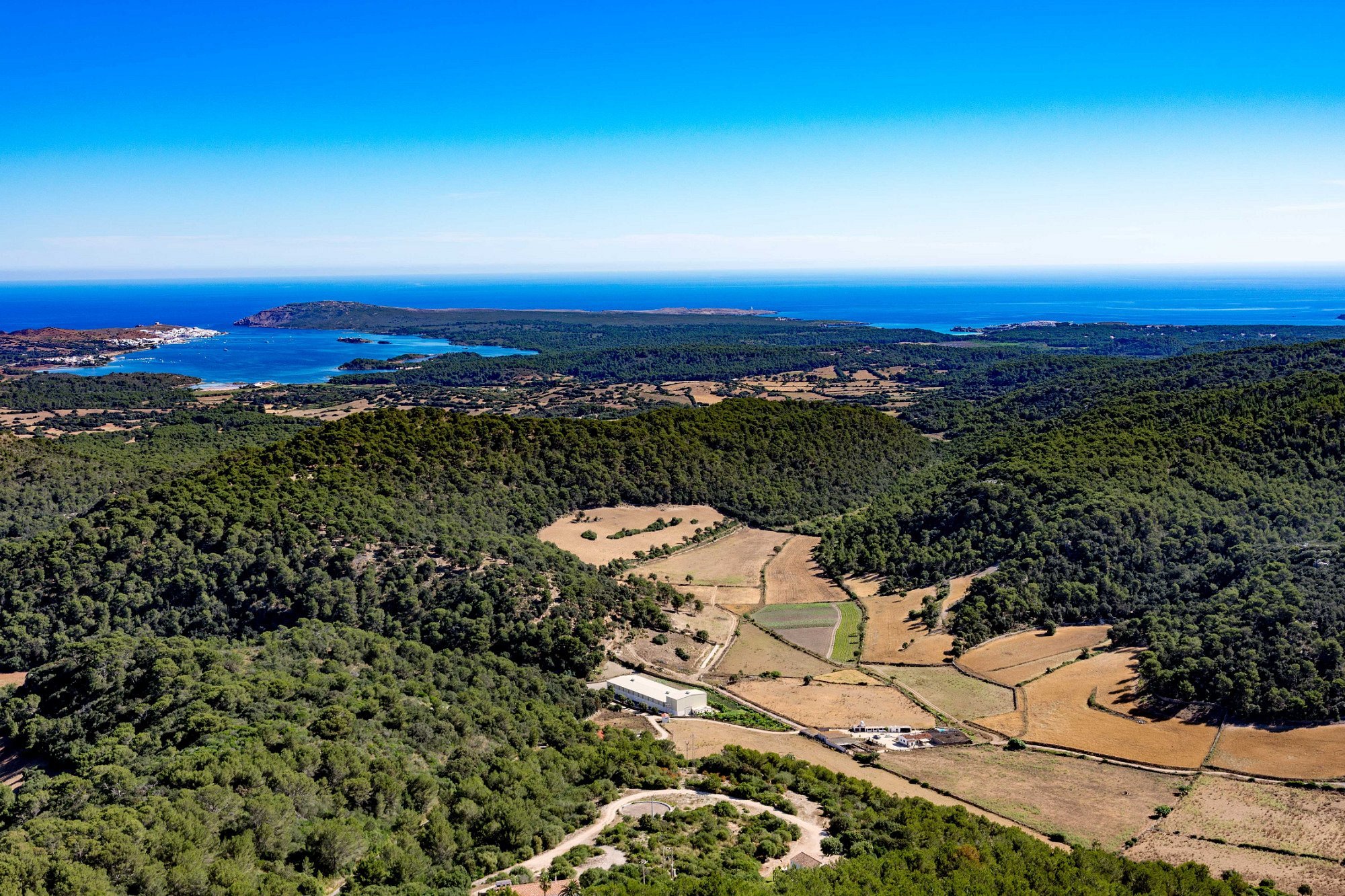
- Monte Toro: highest peak of Menorca (358 m). Its name may derive from the legend of a guardian bull who revealed the cave where the sanctuary was built, or from Arabic al-tur (“the mountain”).
- Santa Àgueda: medieval castle on top of a hill, its name recalls the Christianization of the island and its link to the Sicilian saint.
- Camí de Cavalls: medieval path for coastal defense, used by knights patrolling on horseback. Today it is a trail encircling the entire coastline.
- Camí d’en Kane: legacy of the British governor Sir Richard Kane (18th c.), who promoted an inland communication road still visible in many sections.
Every mountain and path preserves a military, religious or political use that has left its mark on today’s landscape.
Checklist: keys of Menorcan toponymy
| Type of place | Example | Origin of the name |
|---|---|---|
| Village | Es Mercadal | From Latin mercatale (“market”) |
| Cove | Binibèquer | Arabic Bini- (“sons of”) |
| Mountain | Monte Toro | Bull legend / Arabic al-tur |
| Path | Camí de Cavalls | Medieval horseback patrols |
Conclusion: the island written in its names
The toponymy of Menorca is an intangible heritage that complements its visible landscape. Each name is a living archive that reveals who passed by, how they organized the territory and what legacy they left.
Exploring the island with this perspective means discovering another Menorca: a plural island, crossed by Romans, Arabs, Catalans, French and English, whose traces still resonate in every toponym.
By focusing on words, landscapes become stories, and the everyday —a cove, a mountain, a path— turns into shared memory.
How can Awaita help you on your visit to Menorca?
When you are discovering an island with such cultural richness as Menorca, the difference between an ordinary visit and an unforgettable experience lies in context. That’s where Awaita comes in.
Awaita is much more than an app: it’s an intelligent virtual assistant that turns every corner of Menorca into a living story. Designed specifically for those who want to explore heritage freely, without depending on guides, schedules or language barriers, Awaita is the best tool to discover the most authentic and cultural Menorca.
A personalized and accessible experience for everyone
Thanks to its technology, Awaita offers real-time information in several languages and adapted to different ages, making it perfect for both international tourists and residents. Whether you are standing before a Talayotic taula or walking through Ciutadella, Awaita explains what you see with precision and warmth, as if an expert guide were by your side.
Discover the invisible at first sight
With Awaita you will not only know what you are seeing, but also why it matters. It reveals curiosities, local stories, archaeological data and cultural details that don’t appear on signs or in traditional guidebooks.
The freedom to learn at your own pace
No schedules or pre-set routes. You decide when and how much you want to know. Awaita is always available on your phone, ready to answer your questions and enrich your visit depending on your level of interest.
A key tool for cultural tourism
Menorca is World Heritage thanks to its history, and Awaita connects you directly with that legacy. Whether you visit the Naveta des Tudons, the settlement of Trepucó or any Talayotic site, with Awaita you will have all the information at your fingertips — clear, reliable and instant.
If you want to experience Menorca in a deeper, more respectful and enriching way, Awaita is your best ally.
Frequently Asked Questions
What does the name Menorca mean?
It comes from Latin *Minorica* (“smaller island”), in contrast with Mallorca (*Maiorica*).
Why do so many coves start with “Cala en”?
The particle “en” indicates possession: it refers to the surname or nickname of a former owner or inhabitant.
What does the prefix “Bini-” mean?
From the Arabic *banū* (“sons of”), used in the Islamic period to designate lineages or farmsteads.
What is the origin of the Camí de Cavalls?
It was created in the 14th century so that knights could patrol and defend the coast of Menorca.
Does Monte Toro owe its name to a real bull?
Tradition speaks of a magical bull, but studies point to the Arabic *al-tur* (“the mountain”).